

The Quiet Hours
What is stopping you from the best night's sleep of your life?Sleep · Fabric Science
If You Kick the Duvet Off at 2am, Check the Label, Not the Duvet
Polyester is plastic. Put it in a sleep lab against cotton and wool, and it came out worst of the three. Most people sleep wrapped in it every night and blame the room.

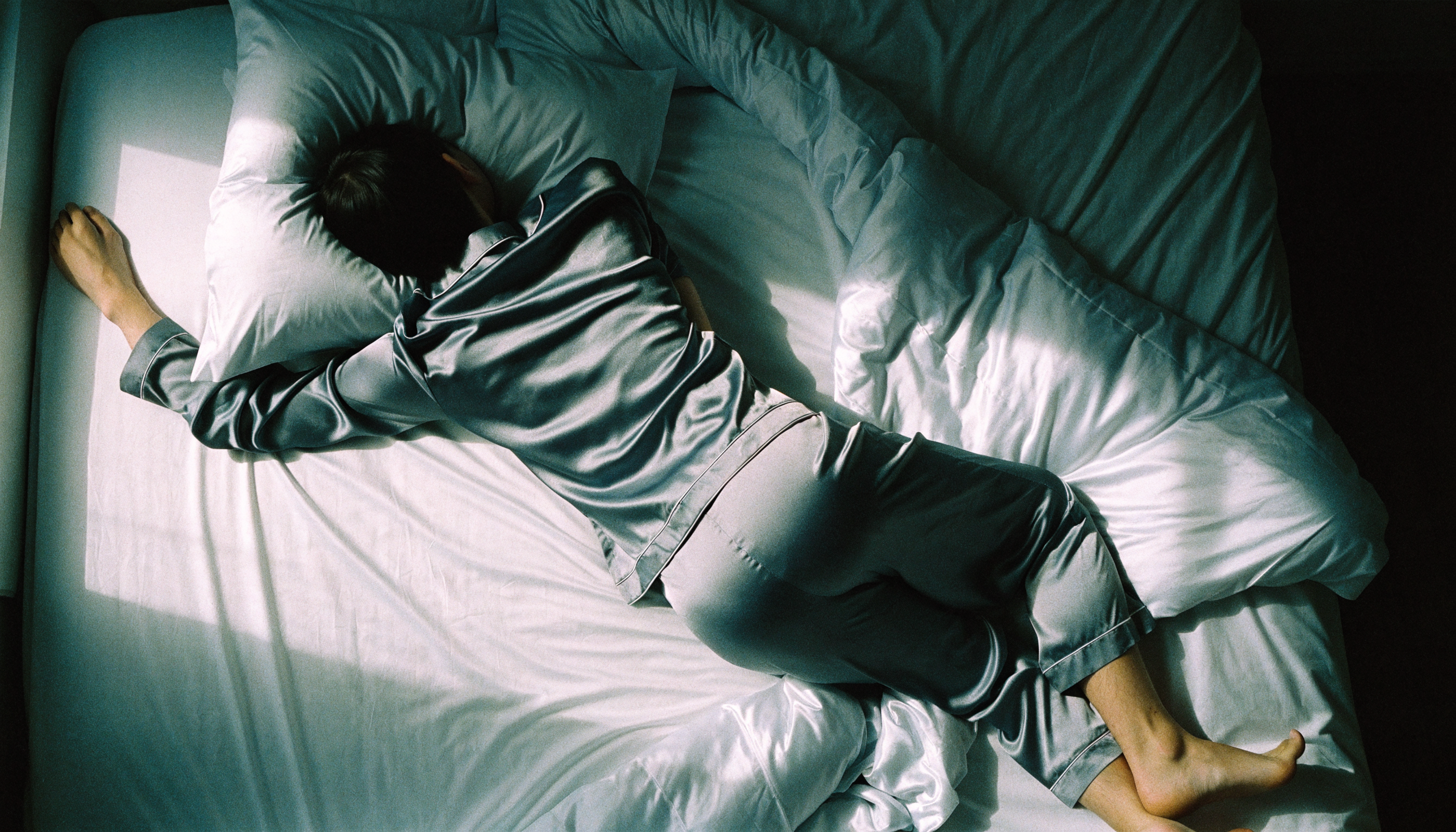
You know the rhythm. Duvet off. One leg out. Duvet back on. Turn the pillow to find the cold side. Off again.
By morning you remember none of it. You just remember being tired.
And you have already tried everything the internet told you to try. Thinner duvet. Window open in February. Fan on the floor. Thermostat down until someone else in the house complains.
Here is the part nobody mentions: every one of those fixes changes the air around you. None of them changes the thing lying directly on your skin for eight hours.
"It was never the room. It was the pyjamas, and that is the cheapest thing in the bedroom to change."
01Your pyjamas are almost certainly plastic
Polyester is polyethylene terephthalate, the same polymer as a drinks bottle. It is in sleepwear because it is cheap to weave, cheap to dye, and it survives industrial laundering. Nobody chose it for how it sleeps.
And it is not a harmless default. In 2019, researchers put thirty-six adults through four nights of monitored sleep in a chamber held at 30°C, changing nothing but what they wore. Cotton, polyester or merino wool. The fibre changed how they slept, measurably. Polyester came out worst of the three.4
Go and read the label in what you wore last night. It takes ten seconds, and it will tell you more than the rest of this article.
02Falling asleep is a heat problem
You do not fall asleep because you are tired. You fall asleep because you get cooler, and you have to keep cooling to stay under.
In a 2016 sleep-lab study, seventeen adults were monitored under full polysomnography. When researchers analysed what predicted how long people took to drop off, temperature explained 67.8% of it.1
Which means the fabric trapping heat against you is not a comfort detail. It is the main event.
Why plastic cannot help you
How much moisture each fibre holds
Standard moisture regain, as a share of dry fibre weight, at 65% relative humidity and 21°C.2
03It is not the sweating. It is the wet patch.
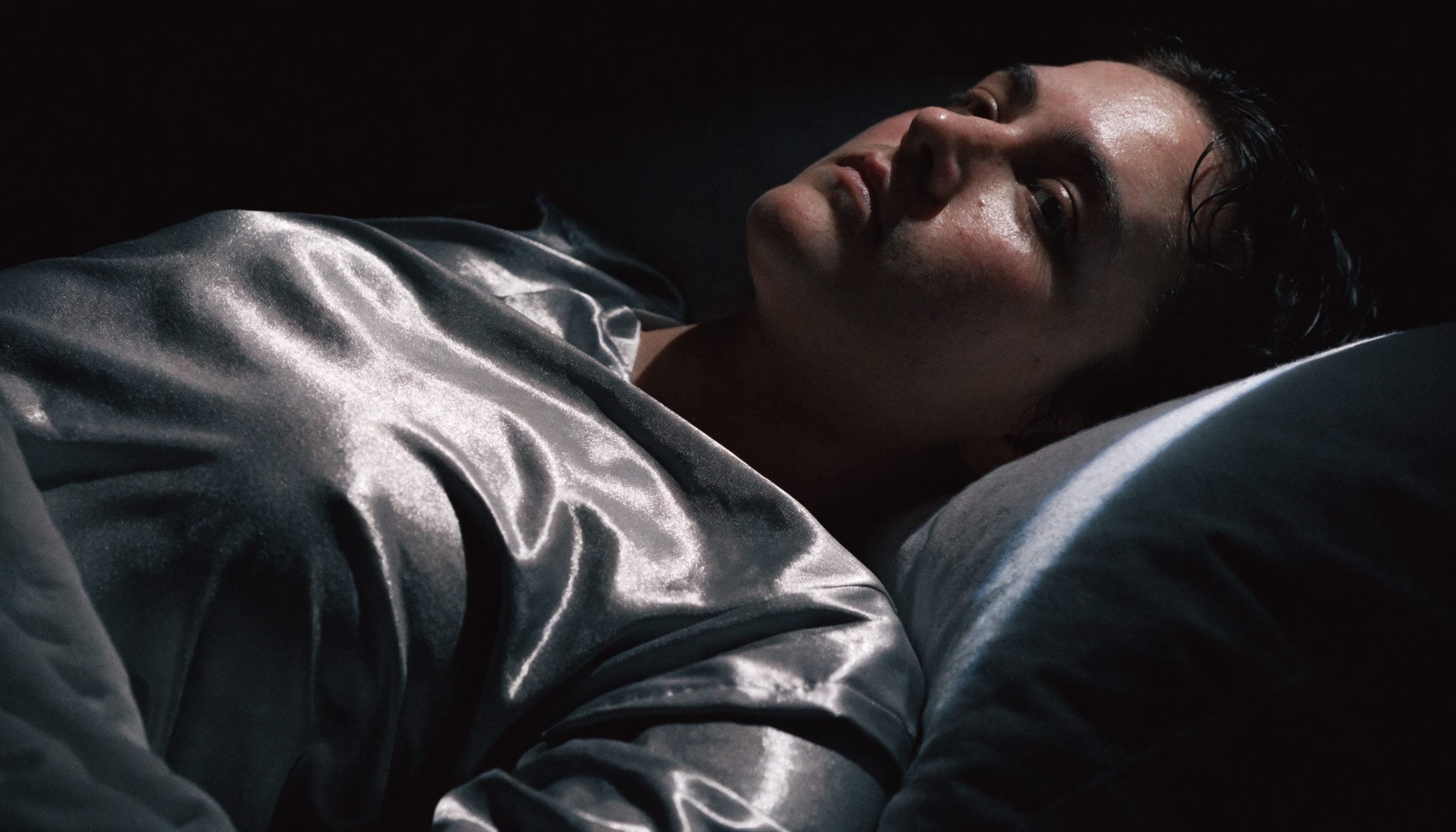
A fabric that cannot absorb does not make moisture vanish. It leaves it where it formed: one cold patch, against your back. Cold and wet and touching you is what pulls you up at two in the morning.
Linen does the opposite with the same water. It takes it up at once and spreads it wide, so it evaporates before you ever notice it. In laboratory testing at the University of Lorraine, linen finished first on comfort, first on breathability and first on moisture handling against polyester, viscose and cotton.3
04What changes when you take the plastic off
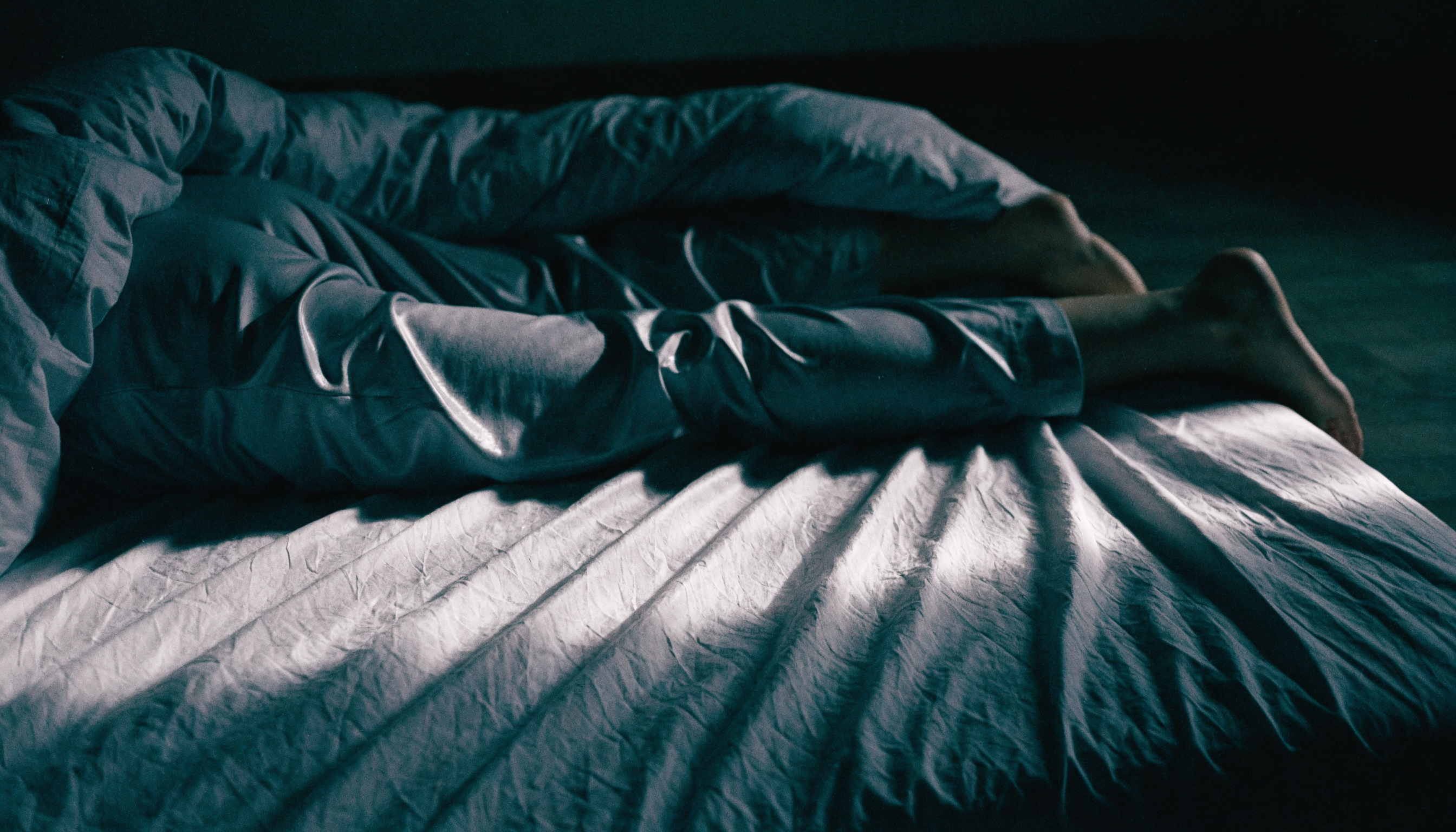
Linen is cool the moment it touches you. That is the fibre doing the one thing polyester cannot: moving heat and water away from your skin instead of holding both against it.
Which means the night stops being something you manage. No hunting for the cold side of the pillow. No negotiating with the duvet at 3am. The cloth takes what your body gives off and lets it go again, quietly, for eight hours. That is the entire job of something you sleep in, and the job plastic was never able to do.
What we make
The last thing between you and the mattress. Make it count.
- Stays dryHolds thirty times more moisture than polyester can. 100% European flax at 150 GSM, heavy enough to hang away from your skin instead of clinging to it.
- Cool on contactCool the second it touches you, soft from the first night. We stone-wash every piece before it ships, so you skip the stiff break-in phase entirely.
- Gets betterLinen softens instead of wearing out. No pilling, no thinning, no stretching out of shape. It improves every wash rather than degrading.
- Safe on skinNothing on your body for eight hours that shouldn't be. OEKO-TEX STANDARD 100: every thread, button and component tested against 1,000+ harmful substances.5
- Made by usCut and sewn by our own team in our own European workshop. A small family business, not a factory order placed by a brand that has never touched the cloth.
- See it first100 days to decide. Take 100 days to see it in your own light, and send it back if it isn't right.

Nightly, long sleeve
40% off

Snooze, long sleeve
40% off

Cloud Nine, short sleeve
40% off

Night Owl, sleeveless
40% off
LOVE LOVE these linens
Well made, great quality and so soft. I've ordered several pieces and continue to reorder the PJ set for myself and for gifts.
Franciska B. · Verified BuyerI just love my new linen pyjama
I just love my new linen pyjama! Lovely contact with the shop and top quality!
Sandra, Germany · Verified BuyerI absolutely love my linen gown
I ABSOLUTELY LOVE MY LINEN GOWN and MY ROBE.
Debbi B. · Verified Buyer
Sources
- Shin M, Halaki M, Swan P, Ireland AH, Chow CM, Nature and Science of Sleep 2016;8:121–131. Seventeen participants; temperature variables explained 67.8% of the variance in sleep onset latency. The sleepwear compared was cotton and wool.
- Standard moisture regain at 65% RH and 21°C, the conditions specified in ASTM D1909: flax 12%, cotton 8.5%, polyester 0.4%.
- CETELOR, Lorraine Textile Testing Centre, University of Lorraine, 2022. 100% linen, polyester, viscose and cotton compared on temperature, air circulation and humidity. Published as rank order, not measured values.
- Chow CM, Shin M, Mahar TJ, Halaki M, Ireland A, Nature and Science of Sleep 2019;11:167–178. Thirty-six participants, four nights each, at 30°C and 50% relative humidity. Fabrics compared: cotton, polyester and merino wool. Linen was not among them.
- OEKO-TEX STANDARD 100, oeko-tex.com. A product-safety certification, not an environmental or organic one.